
What Does ADR Classification Mean for Hazardous Materials?
ADR classification is a critical process within the European Agreement concerning the International Carriage of Dangerous Goods by Road (ADR) that categorises hazardous materials based on their inherent hazards to health, safety, property, and the environment during transport. This classification determines how substances are handled, packaged, labelled, and transported under the ADR regulations, ensuring safe and compliant carriage across European countries, including the United Kingdom.
Key aspects of ADR classification include:
- ADR classes: Hazardous materials are divided into specific hazard classes reflecting their dangers, such as flammable liquids, oxidising agents, gases, infectious substances, and miscellaneous dangerous goods. These classes align with the dangerous goods list in Annex A of the ADR.
- UN numbers: Each classified substance is assigned a unique UN number by the United Nations Economic Commission to standardise identification worldwide.
- Packaging and labelling: Classification informs the type of packaging required, including the use of intermediate bulk containers, and dictates the appropriate hazard labels and placards for vehicles.
- Special provisions and exemptions: Detailed special provisions in Annex B may apply, offering exemptions or additional safety requirements for certain materials.
- Professional competence and certification: Personnel involved in handling and transporting hazardous goods must hold an ADR certificate proving their understanding of classification and safety measures, supporting compliance and risk mitigation.
- Risk assessment: Correct classification is essential for accurate risk assessment, informing emergency response and ensuring safety throughout the international carriage of dangerous goods.
In summary, ADR classification is the foundation of effective hazardous materials management during road transport, guiding every step from licence application to vehicle operation by the vehicle crew and dangerous goods safety advisors.

Why Are Hazardous Goods Divided into ADR Classes?
Dividing hazardous goods into specific ADR classes is essential for ensuring safety, clarity, and effective management during their carriage and transport. The ADR classification organises substances based on their intrinsic hazards, such as flammability, toxicity, corrosiveness, or radioactivity. This systematic division helps in applying tailored provisions, including packaging, labelling, and handling requirements, which reduce risks to people, property, and the environment.
Key reasons for this division include:
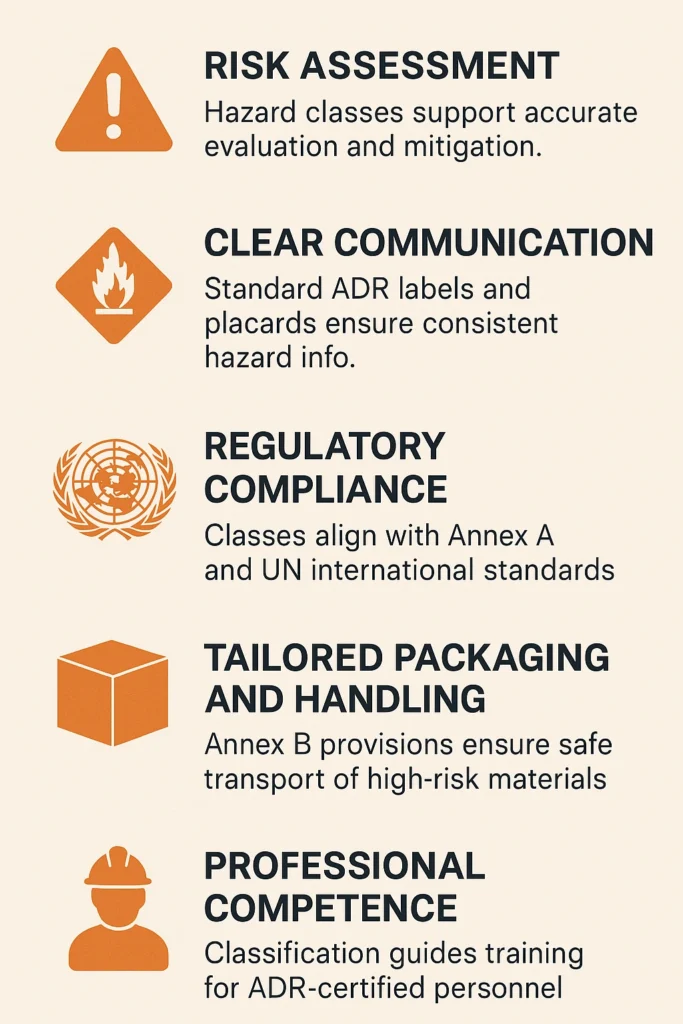
- Risk assessment: Each hazard class reflects different risks, allowing for precise evaluation and mitigation during transport.
- Clear communication: The classification enables consistent hazard communication using standard ADR labels and placards.
- Regulatory compliance: Dividing goods into classes aligns with the dangerous goods list in Annex A and follows international standards set by the United Nations Economic Commission.
- Tailored packaging and handling: Specific packaging requirements and special provisions in Annex B ensure materials like organic peroxides, oxidising agents, and infectious substances are transported safely.
- Professional competence: Classification informs necessary training for personnel holding an ADR certificate, enhancing overall safety.
This structured approach supports safe international carriage and facilitates efficient regulatory enforcement across the European Agreement member states.
How Are UN Numbers Assigned Within ADR Classification?
UN numbers are unique identifiers assigned to hazardous substances within the ADR classification framework to ensure standardised global identification. These numbers, issued by the United Nations Economic Commission, form part of the dangerous goods list referenced in Annex A of the ADR regulations, helping to distinguish between substances with similar hazards.
Important aspects of UN number assignment include:
- Identification of substances: Each hazardous material or hazardous substance receives a specific four-digit UN number.
- Consistency: The UN number standardises identification across all transport modes and regulatory frameworks, aiding in international carriage.
- Link to classification: The number corresponds to the ADR class of the substance, linking it to its hazard properties and transport requirements.
- Use in documentation and labelling: UN numbers appear on transport documents, packaging, and vehicle placards, ensuring clear communication of risks to vehicle crew and emergency responders.
- Regulatory integration: These numbers are recognised in Annexes A and B, and harmonised with other codes like the IMDG Code for maritime and IATA Dangerous Goods Regulations for air transport.
Assigning UN numbers enhances safety and regulatory compliance in the complex logistics of dangerous goods transport worldwide.
Who Uses ADR Classification for Compliance and Transport?
The ADR classification is utilised by a wide range of stakeholders involved in the safe and lawful carriage of dangerous goods across roads within the European Agreement member countries, including the United Kingdom.
Key users include:
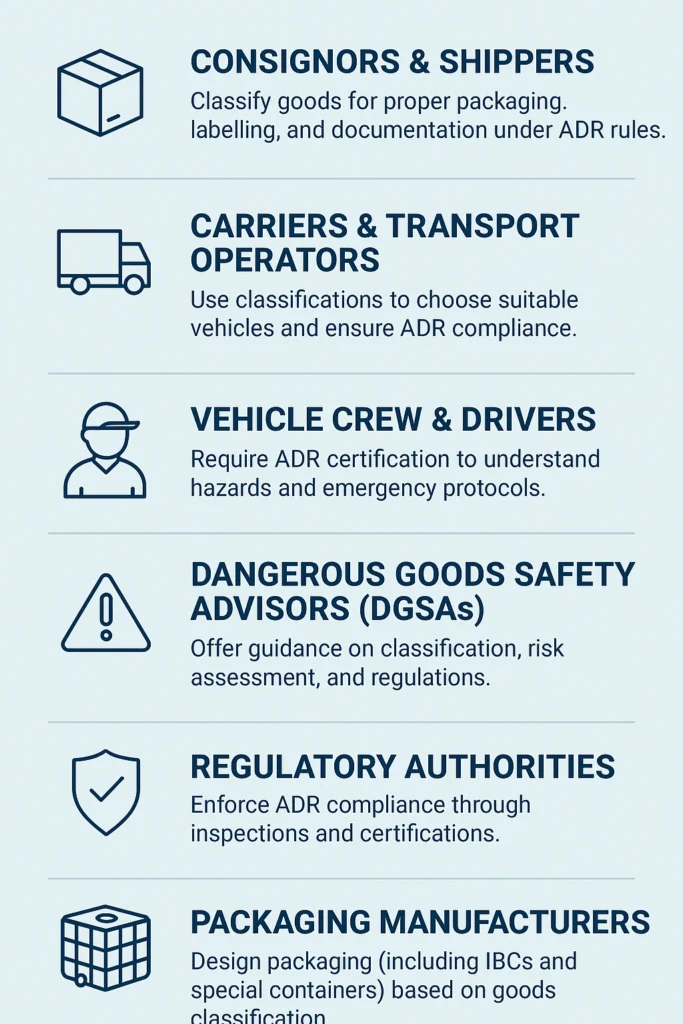
- Consignors and shippers: They classify goods to ensure proper packaging, labelling, and documentation under ADR rules.
- Carriers and transport operators: Use classification to determine vehicle suitability, handling procedures, and compliance with ADR regulations.
- Vehicle crew and drivers: Require training and hold an ADR certificate to understand classification implications, hazards, and emergency measures.
- Dangerous goods safety advisors (DGSAs): Provide expertise on classification, risk assessment, and regulatory adherence.
- Regulatory authorities: Monitor compliance with ADR classes and enforce rules through inspections and certifications.
- Packaging manufacturers: Design and test packaging according to the classification of transported goods, including intermediate bulk containers and specialised containers for liquids or gases.
By using ADR classification, all parties ensure the professional competence necessary for safe and efficient transport, managing hazards according to recognised special provisions and exemptions. This shared framework supports legal compliance, risk reduction, and environmental protection during the international carriage of hazardous materials.
What Is ADR Class 1 – Explosives?
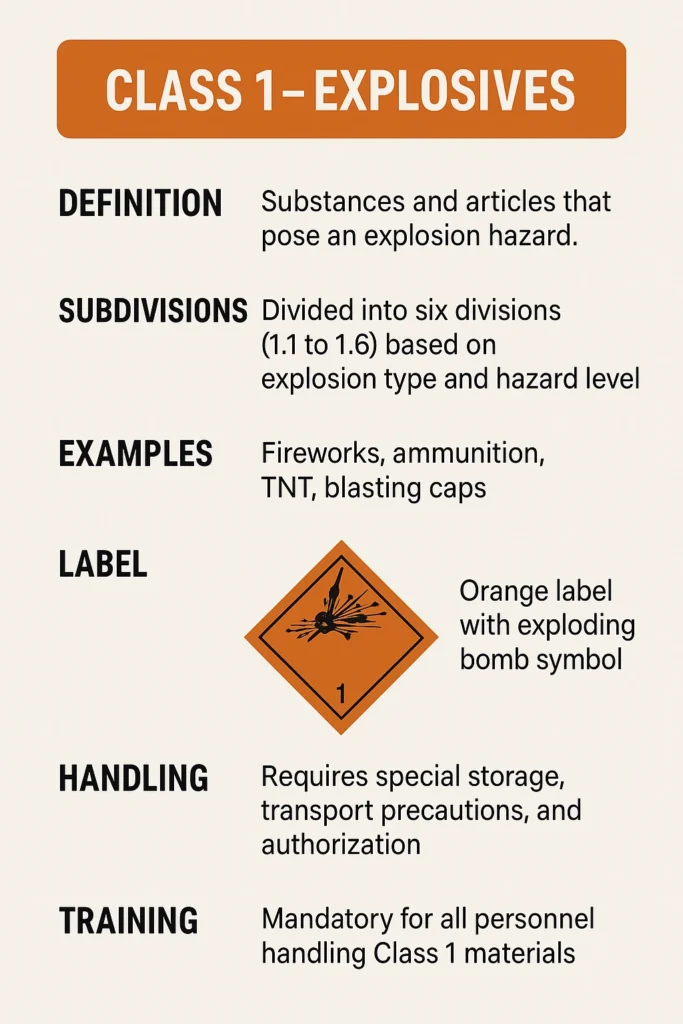
ADR Class 1 covers explosives, substances and articles capable of producing a sudden release of gas and heat through a chemical reaction. These goods present significant hazards in the carriage and transport of dangerous goods under the European Agreement. The dangerous goods list in Annex A specifies the classification criteria and packing groups for explosives, based on sensitivity and potential blast effects.
Key points about ADR Class 1:
- Divided into divisions: Class 1 is subdivided into divisions based on the hazard type, such as mass explosion risk, projection risk, or fire risk. This ensures that each type of explosive material is handled according to its specific danger.
- Strict packaging and labelling: Packaging and labelling requirements are tightly regulated to prevent accidental ignition and ensure proper handling and transportation. Each explosive is assigned a UN number from the dangerous goods list in Annex A to ensure accurate identification.
- Special provisions: Transport of explosives is governed by detailed special provisions in Annex B of the ADR, which outlines handling procedures, packaging requirements, and emergency response measures. These provisions minimise risk during transportation and ensure safe handling during loading and unloading.
- Trained personnel: Only highly trained personnel with an ADR certificate are authorised to manage explosive materials. They must understand the risks associated with the materials they handle and ensure all safety protocols are followed.
- Vehicle crew: The vehicle crew must carry appropriate instructions in writing, providing them with emergency procedures in the event of an accident or spill. These instructions are critical for managing hazardous situations.
- Examples of explosive goods: Common examples include dynamite (UN 0081), fireworks (UN 0333), and ammunition (UN 0012), all of which are regulated under ADR Class 1.
The ADR regulations for Class 1 explosives are crucial for ensuring the safety of transporters, the public, and the environment during the international carriage of such hazardous materials.
What Is ADR Class 2 – Gases?
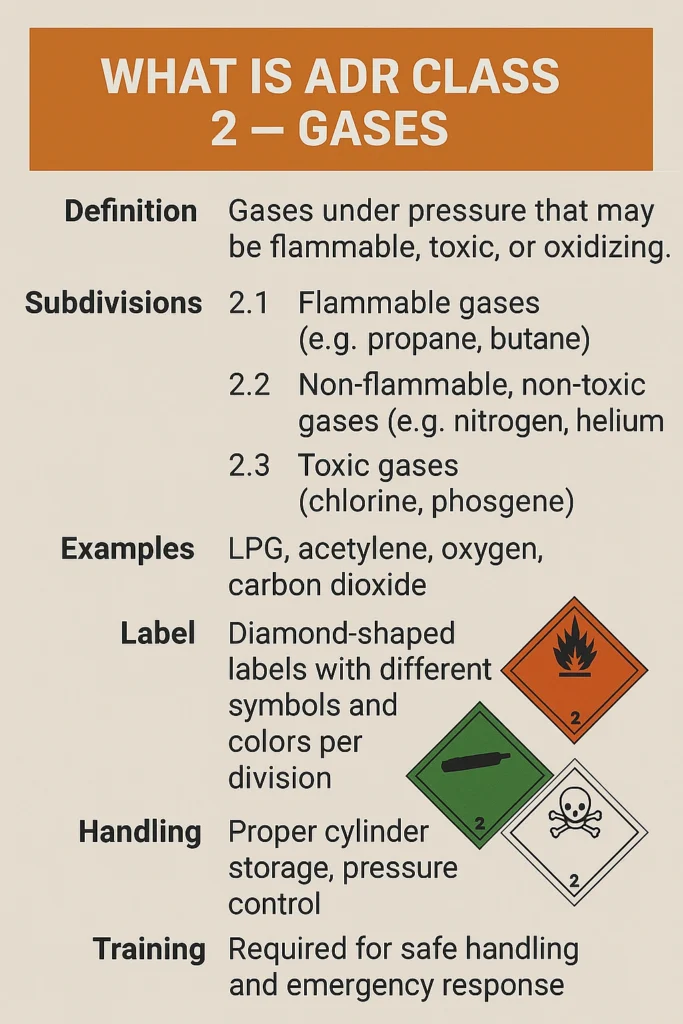
ADR Class 2 includes gases that are compressed, liquefied, or dissolved under pressure. These gases present diverse hazards, such as flammability, toxicity, and reactivity, and are classified into three specific divisions to ensure safe handling and transport.
Key points about ADR Class 2:
- Divisions: Class 2 is divided into three divisions:
- Division 2.1: Flammable gases (e.g., propane, UN 1075).
- Division 2.2: Non-flammable, non-toxic gases (e.g., nitrogen, UN 1066).
- Division 2.3: Toxic gases (e.g., chlorine, UN 1017).
- Packaging and transport: Gases are typically packaged in transportable pressure equipment like cylinders and tanks. These must adhere to transportable pressure equipment regulations, ensuring safe containment of hazardous gases during dangerous goods transport.
- UN numbers: Each gas is assigned a UN number (e.g., UN 1075 for propane) listed in the dangerous goods list in Annex A and marked on the packaging for clear identification.
- Labelling and placarding: Gases must be labelled and placarded according to their hazard class and UN number to clearly communicate risks. This includes specific labels for flammability, toxicity, and non-toxicity as per ADR guidelines in Annex B.
- Trained personnel: Handling ADR Class 2 gases requires professional competence. Vehicle crews transporting gases must hold a valid ADR certificate, ensuring they are familiar with the safety protocols and emergency procedures associated with gas hazards.
- Common examples: Common gases transported under ADR Class 2 include propane (UN 1075), oxygen (UN 1072), and chlorine (UN 1017).
ADR regulations ensure the safe carriage of gases by establishing clear guidelines for packaging, labelling, and emergency response, protecting both transport workers and the public.
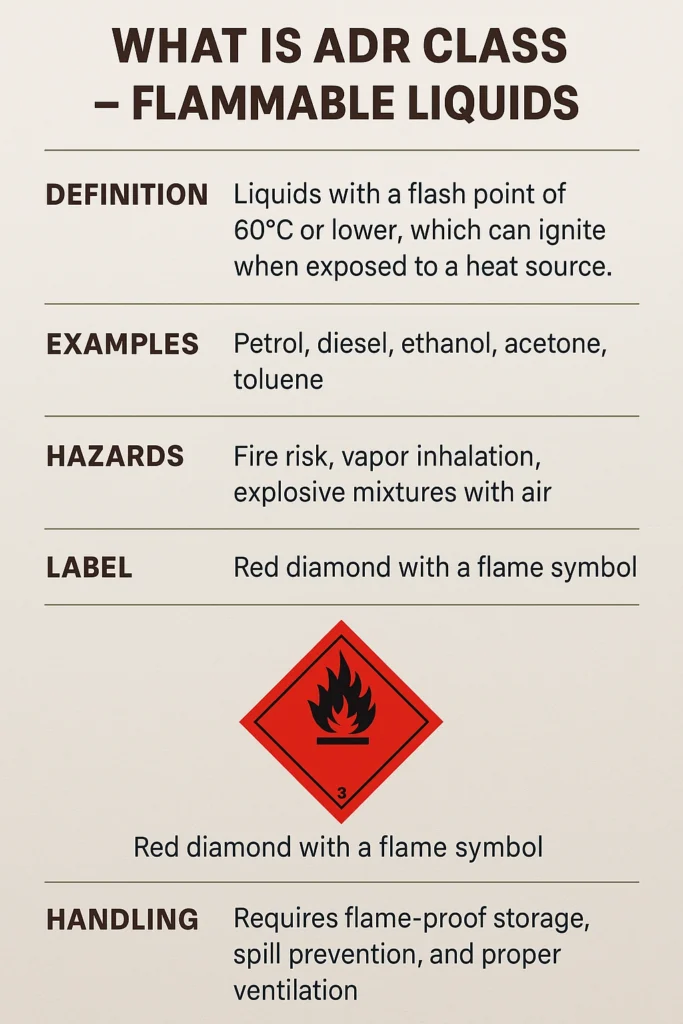
What Is ADR Class 3 – Flammable Liquids?
ADR Class 3 includes flammable liquids, which are liquids that can catch fire easily when exposed to heat or flame. These materials are classified based on their flash point (the temperature at which they form flammable vapours) and boiling point, with higher-risk substances falling into stricter packing groups.
Key points about ADR Class 3:
- Packing groups: Class 3 liquids are classified into three packing groups based on the flash point and boiling point:
- Packing Group I: High-risk flammable liquids with a flashpoint below 23°C.
- Packing Group II: Moderate-risk liquids with a flashpoint between 23°C and 60°C.
- Packing Group III: Lower-risk liquids with a flashpoint above 60°C.
- Examples: Common Class 3 substances include gasoline (UN 1203), ethanol (UN 1170), and acetone (UN 1090).
- Specialised packaging: Intermediate bulk containers (IBCs) and packaging must be designed to prevent leaks and ignition, ensuring safety during transport.
- Hazard labelling and special provisions: Vehicles must display appropriate hazard labels to communicate the flammable nature of the liquid. Transport must comply with specific special provisions to minimise risks.
- Training and certification: Personnel handling flammable liquids must have an ADR certificate demonstrating their professional competence in managing the hazards associated with these materials.
ADR Class 3 regulations ensure safe dangerous goods transport by establishing clear packaging, labelling, and handling protocols, helping prevent accidents and protecting both personnel and the environment.
What Is ADR Class 4 – Flammable Solids and Reactive Substances?
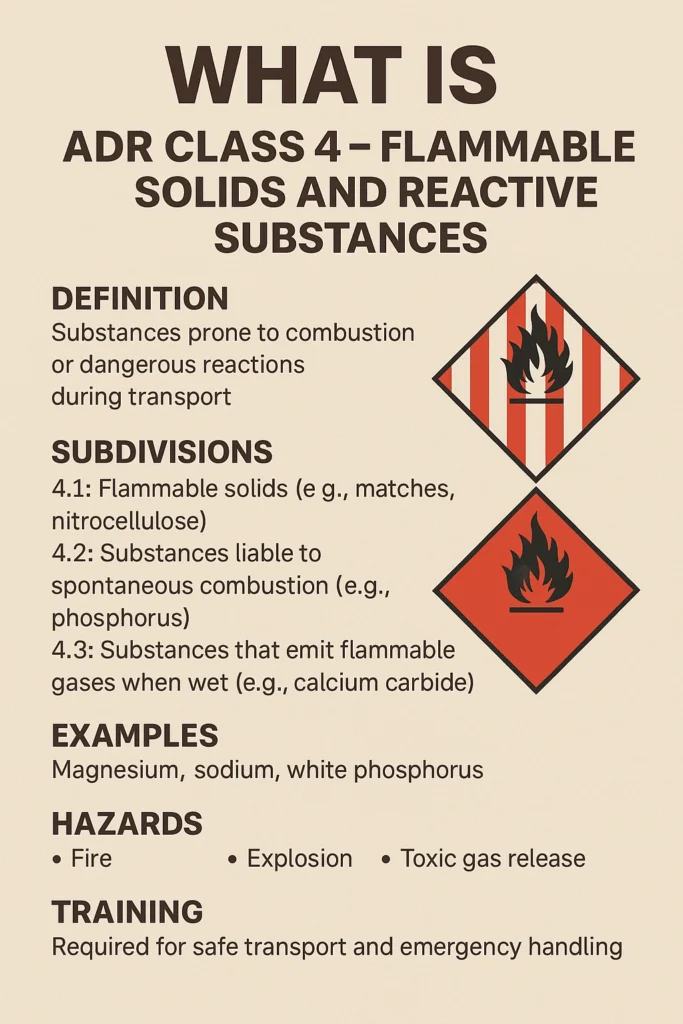
ADR Class 4 covers flammable solids, spontaneously combustible substances, and substances that emit flammable gases when in contact with water. These materials present distinct hazards due to their ability to react under specific conditions, such as heat, moisture, or friction.
Key points about ADR Class 4:
- Divisions: Class 4 is divided into three divisions:
- Division 4.1: Flammable solids (e.g., matches (UN 1361)).
- Division 4.2: Substances liable to spontaneous combustion (e.g., phosphorus (UN 1363)).
- Division 4.3: Substances emitting flammable gases upon contact with water (e.g., sodium hydride (UN 1425)).
- Packaging and handling: Packaging must prevent friction, heat, or moisture exposure, which could trigger dangerous reactions. Strict segregation rules apply during dangerous goods transport to prevent accidental ignition or hazardous chemical reactions.
- Risk assessment: Due to the reactive nature of these substances, a detailed risk assessment must be conducted to identify and mitigate potential hazards. This helps transporters understand how to handle these goods safely and comply with ADR regulations.
- Special provisions: Annex B outlines specific special provisions for the safe transport of Class 4 goods, guiding the required safety measures and documentation for each substance.
- Training: Personnel involved in the transport of ADR Class 4 goods must hold an ADR certificate, confirming their professional competence in understanding the risks and applying emergency procedures.
- Examples: Common substances in this class include matches (UN 1361), phosphorus (UN 1363), and sodium hydride (UN 1425).
ADR Class 4 regulations ensure that flammable solids and reactive substances are safely transported by providing clear rules on labelling, packaging, handling, and emergency response.
What Is ADR Class 5 – Oxidising Substances and Organic Peroxides?
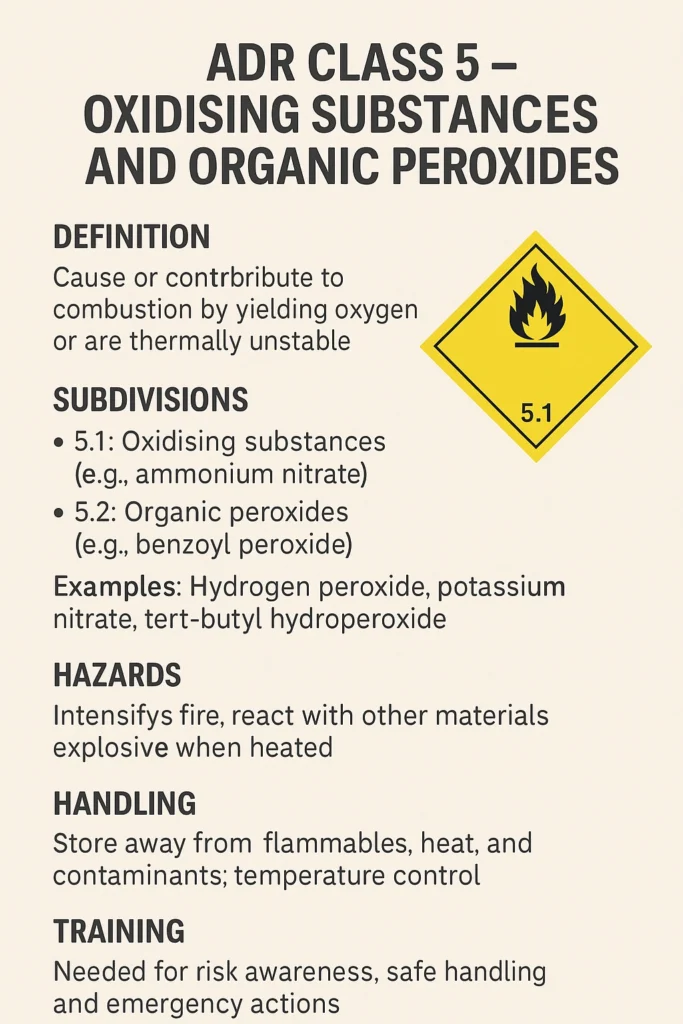
ADR Class 5 includes oxidising substances and organic peroxides, both of which present significant hazards due to their reactivity and ability to initiate or accelerate fires.
Key points about ADR Class 5:
- Oxidising agents (5.1): These substances release oxygen, which can promote the combustion of other materials. Potassium chlorate (UN 1486) is an example, commonly used in industrial processes.
- Organic peroxides (5.2): These are unstable materials that are sensitive to heat, friction, or shock. Methyl ethyl ketone peroxide (UN 3101) is one such substance, often used in polymer production.
- Packaging: Packaging must be designed to prevent reaction with incompatible substances and to isolate oxidisers and peroxides from combustible materials. This ensures that the potential for dangerous reactions is minimised.
- Hazard labelling and special provisions: ADR regulations require clear hazard labelling to communicate the risks associated with these materials. In addition, special provisions in Annex B provide specific guidelines for safe handling and transport.
- Training and certification: Personnel involved in handling and transporting ADR Class 5 substances must complete dangerous goods courses and hold a valid ADR certificate. This ensures they have the necessary knowledge to safely manage these hazardous materials.
- Examples: Common examples include potassium chlorate (UN 1486) for oxidising agents and methyl ethyl ketone peroxide (UN 3101) for organic peroxides.
Class 5 substances require strict safety protocols to prevent accidents during dangerous goods transport, including precise packaging, labelling, and thorough training for all involved personnel.
What Is ADR Class 6 – Toxic and Infectious Substances?
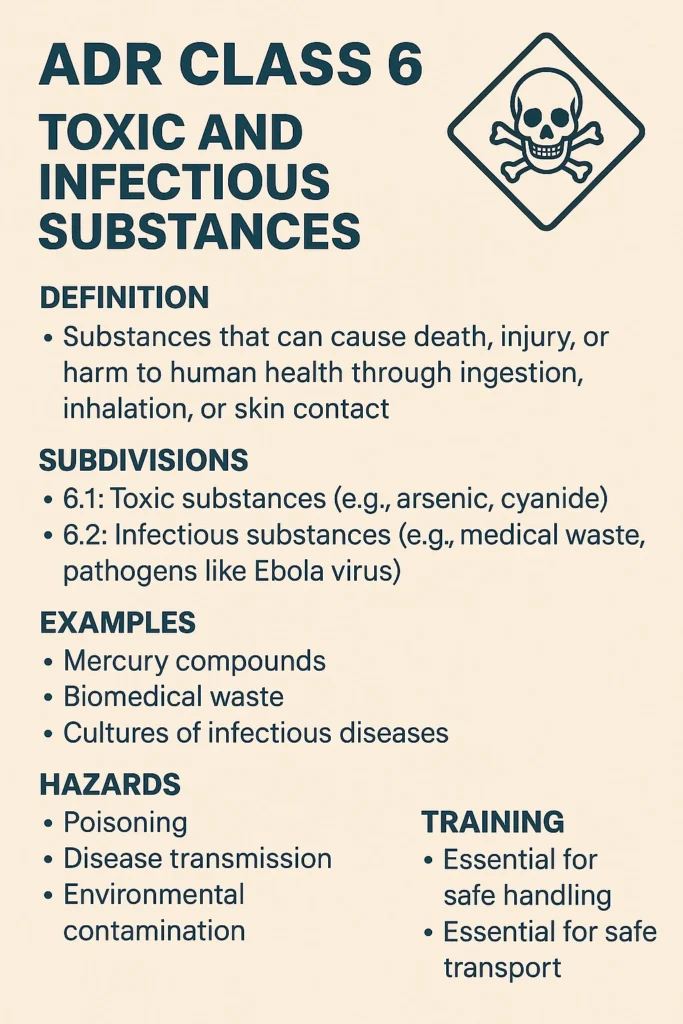
ADR Class 6 encompasses toxic substances and infectious substances, both of which pose serious health risks during dangerous goods transport. These materials can cause severe health effects or death on exposure, and require strict safety protocols to prevent harm to people, animals, and the environment.
Key points about ADR Class 6:
- Toxic substances (6.1): These are materials that can cause acute health hazards, such as cyanides (UN 1689). These substances are highly regulated due to their lethal potential on exposure.
- Infectious substances (6.2): These materials include pathogens capable of causing diseases, such as medical samples or biological substances. An example is UN 2814, which covers infectious substances.
- Packaging: Packaging for toxic and infectious substances must prevent leaks and exposure, ensuring the materials are securely contained. This is vital for public health and safety.
- Labelling and segregation: Materials in ADR Class 6 must be clearly labelled with hazard symbols indicating toxicity or infectious risks. Special provisions apply for medical waste and biological samples to prevent contamination during transport.
- Training and certification: Personnel handling these substances must undergo ADR training and hold an ADR certificate, demonstrating their understanding of the risks and emergency measures required when transporting these hazardous materials.
- Compliance: ADR Class 6 transport involves compliance with health regulations, detailed risk assessments, and the proper use of special provisions in Annex A and Annex B. Each substance is assigned a UN number, ensuring accurate identification during international carriage.
ADR regulations ensure that toxic and infectious substances are transported with the highest safety standards, minimising exposure risks and protecting public health.
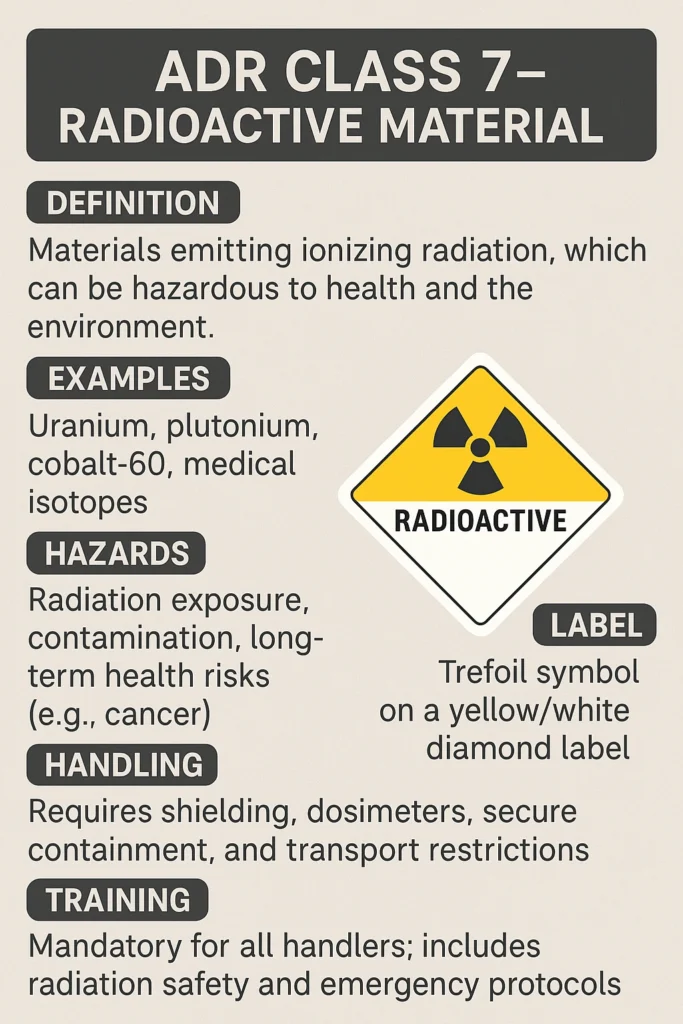
What Is ADR Class 7 – Radioactive Material?
ADR Class 7 encompasses radioactive materials, substances that emit ionising radiation, posing significant risks to human health and the environment. These materials require specialised handling and strict regulatory compliance to ensure safe transport and minimise radiation exposure.
Key points about ADR Class 7:
- Strict regulations: Packaging, labelling, and vehicle requirements are highly regulated to ensure containment and safe handling of radioactive materials. This includes stringent safety measures to prevent radiation leaks.
- Specialised shielding and containment: Transporting radioactive materials requires specialised shielding and containment to protect both the vehicle crew and the public. This is crucial to prevent radiation exposure during dangerous goods transport.
- Certified personnel: Only certified, trained personnel are permitted to handle radioactive substances. These workers must have specific training on radiation safety to manage risks during transport.
- Transport under licence: Radioactive materials are transported under a licence, with detailed documentation and specific handling procedures. Compliance is monitored by competent authorities as per ADR regulations and Annexes A and B.
- UN numbers: Radioactive materials are assigned UN numbers (e.g., UN 2910 for low-specific activity material) for clear identification and classification, aiding in transport and safety compliance.
- Examples: Common materials in Class 7 include medical isotopes used in diagnostics and treatments, and nuclear fuel.
ADR Class 7 ensures the safe transport of radioactive materials by setting out clear regulations, from packaging and labelling to vehicle safety standards and the qualification of personnel. Regulatory compliance is crucial to protect health and the environment during international carriage.
What Is ADR Class 8 – Corrosive Substances?
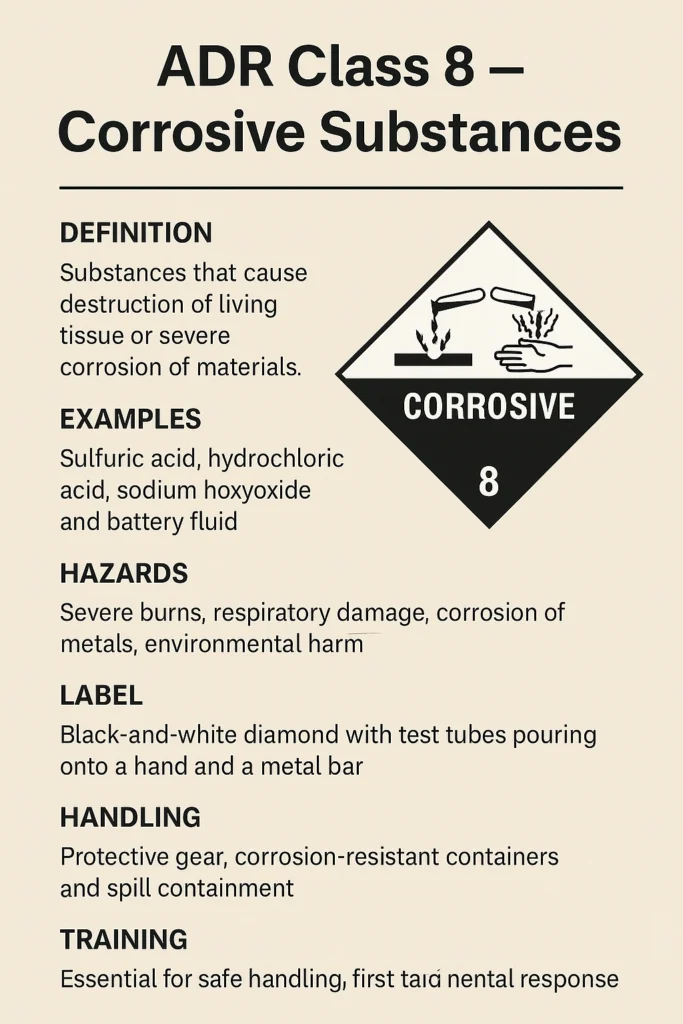
ADR Class 8 includes corrosive substances, which are materials capable of causing severe damage to living tissue or materials like metals upon contact. These materials require strict handling, packaging, and transport protocols to ensure safety.
Key points about ADR Class 8:
- Corrosive substances include acids and bases, such as hydrochloric acid (UN 1789) and sulphuric acid (UN 1830), which can destroy skin, eyes, or metals.
- Packaging: Packaging for corrosive substances must be resistant to corrosion and capable of preventing leaks. This ensures safe transport and prevents accidental exposure.
- Vehicle labelling: Vehicles carrying corrosive materials must display corrosive hazard placards to clearly communicate the risk to handlers, emergency responders, and the public.
- Training and certification: Personnel handling ADR Class 8 substances must have an ADR certificate and receive training on the specific risks of these materials. They must also understand emergency response procedures in case of spills or leaks.
- Special provisions: The transport of mixtures and substances with corrosive vapours is subject to additional special provisions in Annexes A and B. These provisions outline how to handle substances that release dangerous vapours during transport.
- Risk assessment: A detailed risk assessment must be performed to ensure safe handling, transport, and emergency preparedness.
ADR Class 8 regulations ensure the safe transport of dangerous goods that pose significant risks to human health and property. Proper packaging, labelling, and training are essential to mitigate the hazards of corrosive substances during dangerous goods transport.
What Is ADR Class 9 – Miscellaneous Dangerous Goods?
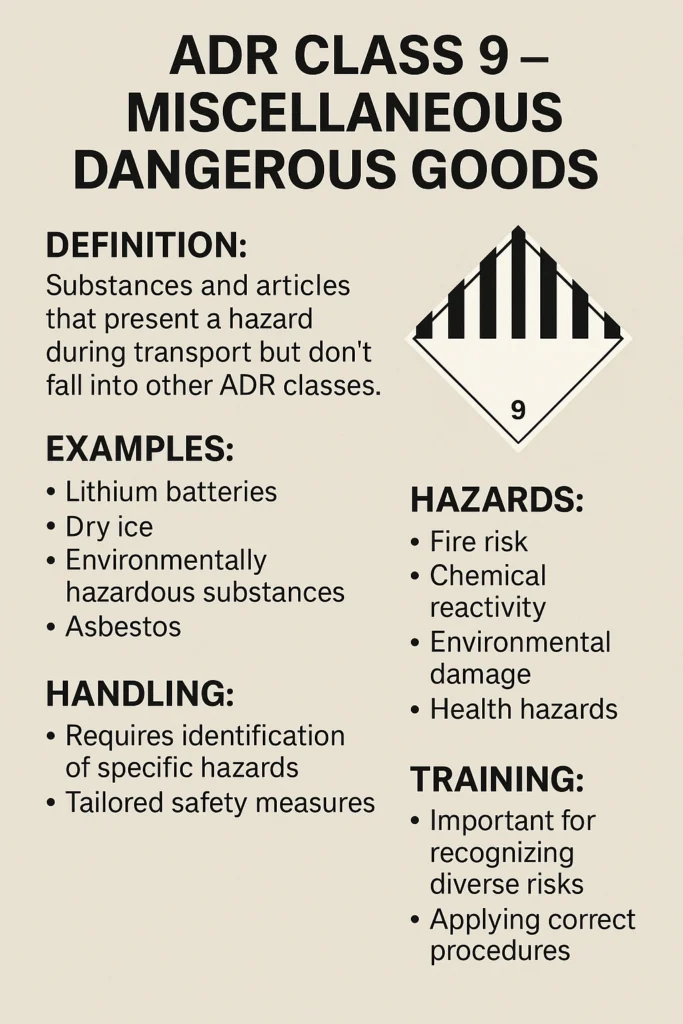
ADR Class 9 covers miscellaneous dangerous goods that present various risks not captured by other hazard classes. This class includes a broad range of substances, including lithium batteries, environmentally hazardous substances, and materials that may pose special transport risks.
Key points about ADR Class 9:
- Scope: This class includes goods that don’t fit neatly into the other ADR classes, such as lithium batteries (UN 3090) and environmentally hazardous substances (UN 3077), as well as materials with narcotic effects or other unique risks.
- Packaging and labelling: Packaging and labelling for Class 9 materials must adhere to special provisions that address the specific risks associated with each substance. The correct UN number must be assigned for proper identification.
- Special provisions: There are specific special provisions in Annexes A and B of the ADR to guide the safe transport of these goods, ensuring proper handling and emergency response measures are in place.
- Risk assessment and compliance: Class 9 goods require a careful risk assessment to manage any potential hazards during transport. This includes ensuring compliance with ADR regulations for safe handling and environmentally hazardous substances.
- Dangerous goods safety advisors: These professionals play a key role in assessing and managing the safe transport of miscellaneous dangerous goods, advising on packaging, labelling, and transport routes to mitigate risks.
- Training and certification: Personnel handling Class 9 goods must be trained and certified, holding an ADR certificate to ensure they understand the risks and safety measures required.
ADR Class 9 is crucial for the safe transport of dangerous goods that don’t fall under the other classes, ensuring that all materials are handled, packaged, and labelled according to their unique hazards.
Why Are Emergency Response Measures Tied to ADR Classification?
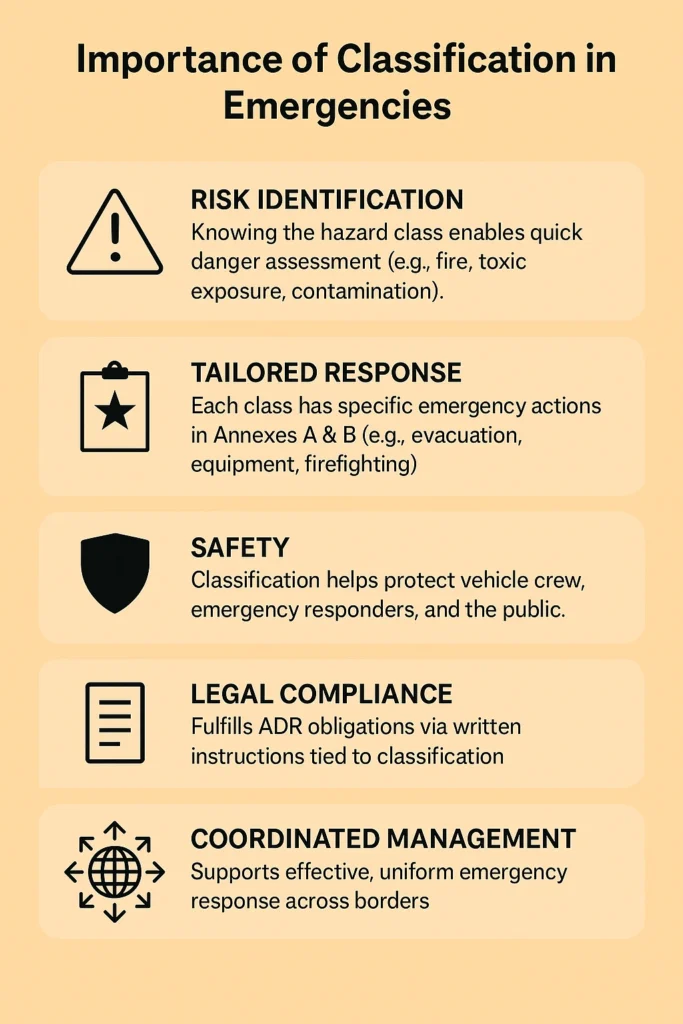
Emergency response measures are closely linked to ADR classification because the specific nature and severity of hazards posed by dangerous goods determine the appropriate actions during an incident. The ADR regulations classify hazardous materials into distinct ADR classes based on their physical, chemical, and toxicological properties. This classification guides first responders and transport personnel in identifying risks and implementing effective emergency procedures.
Key reasons include:
- Risk identification: Knowing the hazard class (e.g., flammable liquids, toxic substances, corrosives) enables rapid assessment of dangers such as fire, toxic exposure, or environmental contamination.
- Tailored response: Each class has detailed special provisions in Annexes A and B specifying required emergency actions, including evacuation distances, firefighting agents, and protective equipment.
- Safety of vehicle crew and public: Accurate classification helps protect vehicle crew, emergency teams, and the public by minimising exposure and preventing escalation.
- Legal compliance: Transport operators and drivers must follow instructions in writing linked to the classification, fulfilling their ADR certificate obligations.
- Coordinated management: Consistent classification ensures that emergency services across jurisdictions can respond effectively and uniformly, especially during international carriage.
In essence, ADR classification forms the foundation for structured, informed, and safe emergency responses, reducing harm during accidents involving hazardous materials.

How Are Hazard Labels and Placards Linked to ADR Classes?
Hazard labels and placards are directly tied to the ADR classification system, clearly indicating the specific hazard class of dangerous goods being transported. According to Annex A of the ADR regulations, each ADR class has designated labels that must be displayed on packaging, intermediate bulk containers, and transport vehicles. These markings communicate risks such as flammability, toxicity, or corrosiveness to handlers and emergency responders. Correct labelling supports compliance with special provisions and ensures safe carriage across the European Agreement jurisdictions.
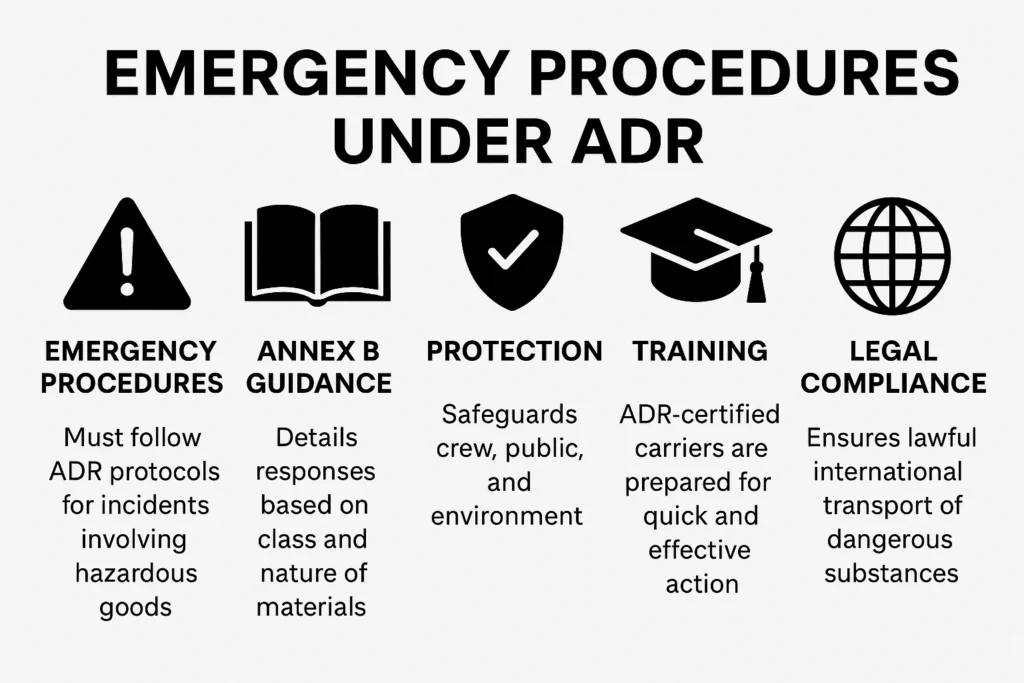
Why Must Carriers Follow Specific Emergency Procedures?
Carriers must adhere to specific emergency procedures outlined in the ADR regulations to manage risks during incidents involving hazardous goods transport. These procedures, detailed in Annex B, provide tailored responses based on the ADR class and nature of the hazardous materials. Following them protects the vehicle crew, public safety, and the environment. Carriers with proper ADR certificates are trained in these protocols, ensuring swift, effective action during accidents or spills, and legal compliance throughout the international carriage of dangerous substances.
What Guidance Applies for Mixed-Class Transport?
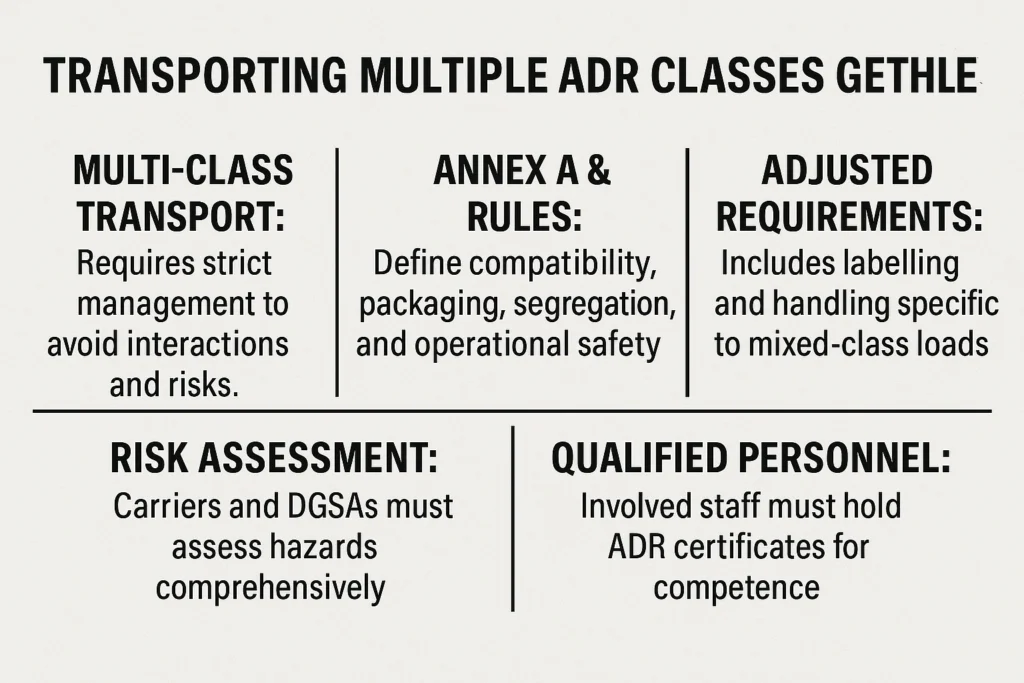
When transporting multiple ADR classes together, strict guidance applies to manage interactions and risks. The ADR regulations specify compatibility rules in Annex A and operational measures in Annex B to prevent hazardous reactions between different substances. Packaging, segregation, and labelling requirements are adjusted accordingly. Carriers and dangerous goods safety advisors must conduct thorough risk assessments and ensure all involved personnel have the professional competence, including valid ADR certificates, to safely manage mixed-class consignments during dangerous goods transport.
Why Is Understanding ADR Classification Critical for Compliance?
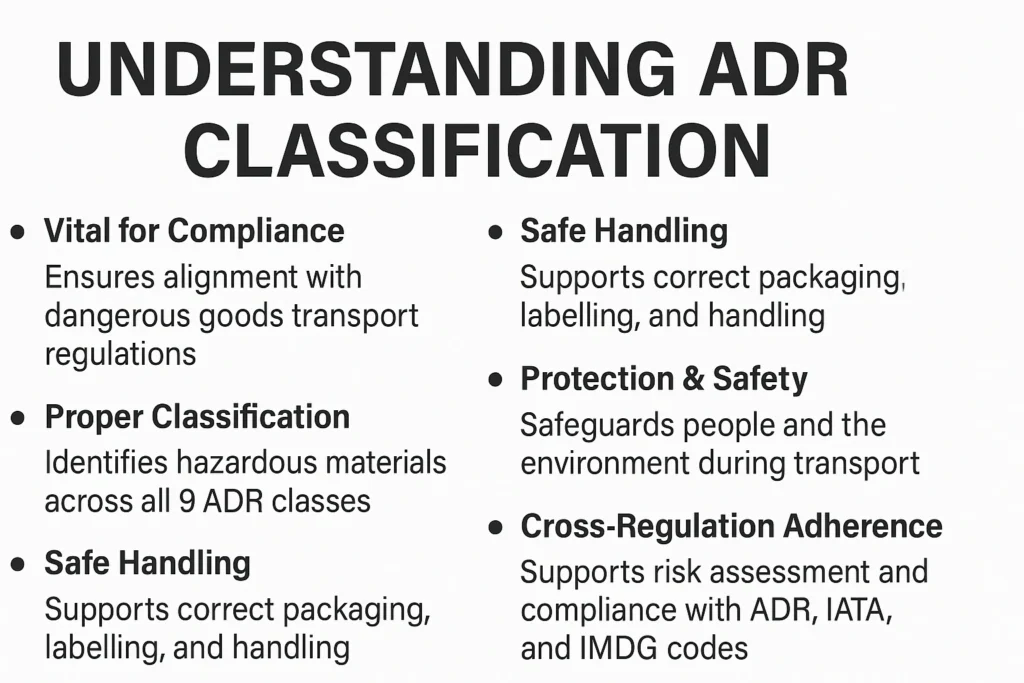
Understanding ADR classification is vital to comply with the dangerous goods regulation governing the carriage of dangerous goods. Proper classification ensures hazardous materials are correctly identified within the 9 classes of dangerous goods, including Class 9 miscellaneous dangerous goods, facilitating appropriate packaging, labelling, and handling. This protects people and the environment by enabling safe transport of dangerous goods and meeting legal requirements across jurisdictions. Accurate classification supports effective risk assessment and adherence to both ADR and complementary regulations like IATA Dangerous Goods Regulations and the International Maritime Dangerous Goods Code.
How Does Misclassification Lead to Legal Penalties?
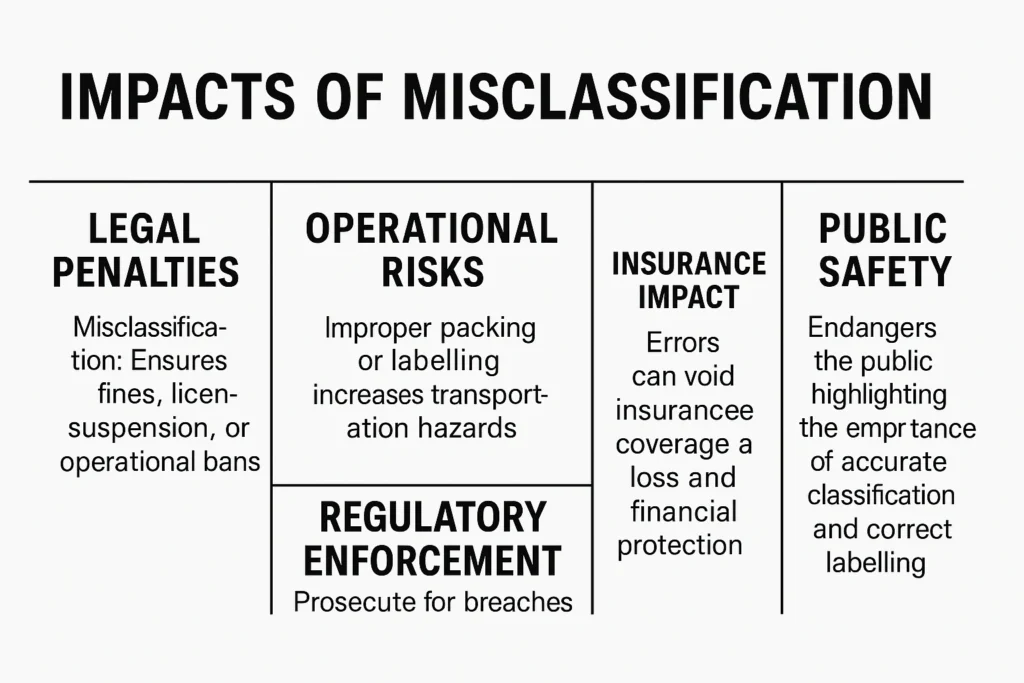
Misclassification of dangerous goods can lead to serious legal penalties including fines, licence suspension, and operational bans. Incorrectly categorised goods may be improperly packed or labelled, increasing risks during transportation dangerous goods operations and potentially causing accidents. Regulatory authorities enforce strict compliance with ADR transport dangerous goods rules and may prosecute for breaches. Misclassification also jeopardises insurance coverage and places public safety at risk, underscoring the importance of thorough knowledge of dangerous goods classes and the relevant dangerous goods labels.
What Training Is Required for Correct Classification?
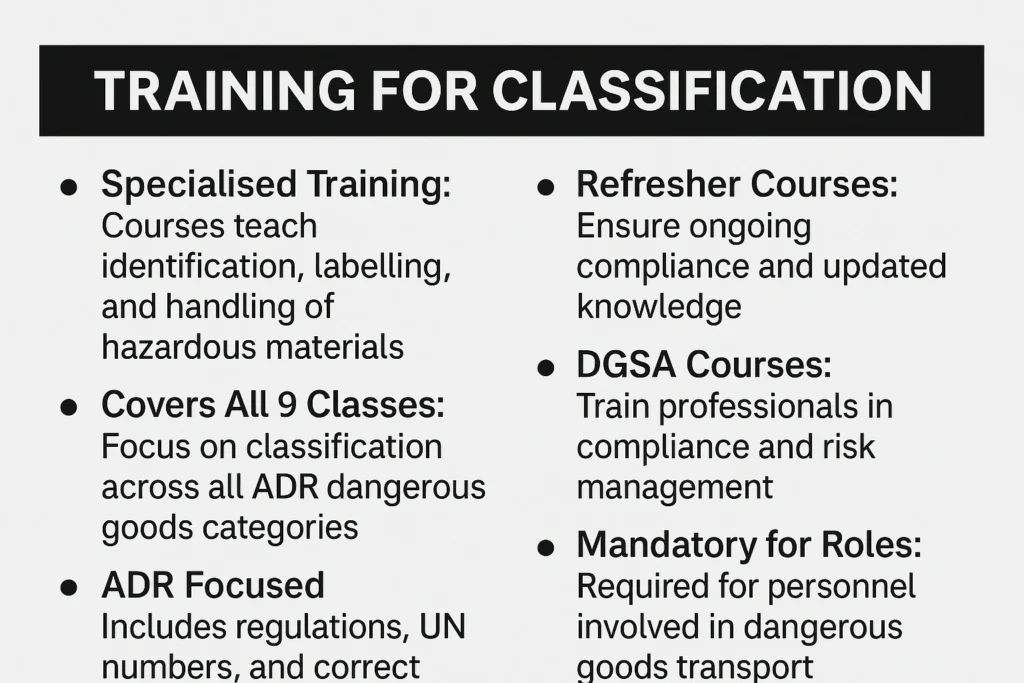
Correct classification requires specialised dangerous goods training courses designed to teach the identification, labelling, and handling of hazardous materials across the 9 classes of dangerous goods. Training includes both initial and refresher courses covering ADR regulations, dangerous goods labelling, and un numbers for dangerous goods. Many personnel also pursue dangerous goods safety advisor courses to gain expertise in compliance and risk management. These programmes ensure professional competence and are often mandatory for those involved in the transport of dangerous goods.

Who Is Responsible for Correct ADR Classification?
The responsibility for correct ADR classification primarily lies with the consignor or shipper who prepares the goods for transport. Additionally, dangerous goods safety advisors play a critical role in verifying classification accuracy and advising on regulatory compliance. Drivers and carriers must understand the classifications to ensure safe ADR transport dangerous goods. Organisations must ensure staff hold appropriate qualifications, such as an ADR certificate, and maintain strict adherence to classification standards throughout the supply chain to guarantee safety and legal compliance.